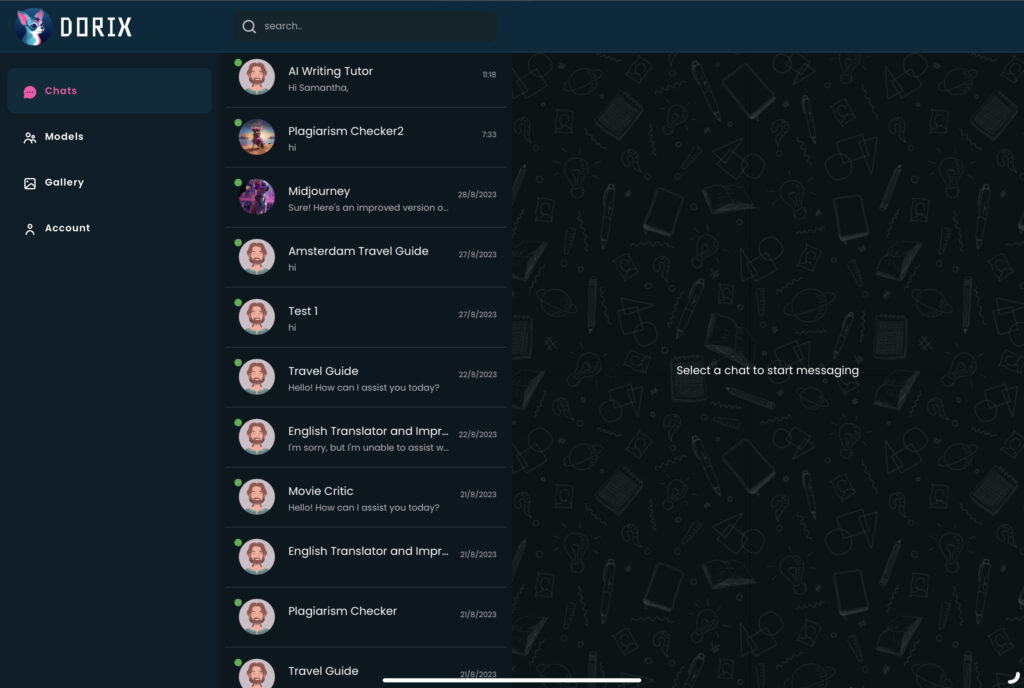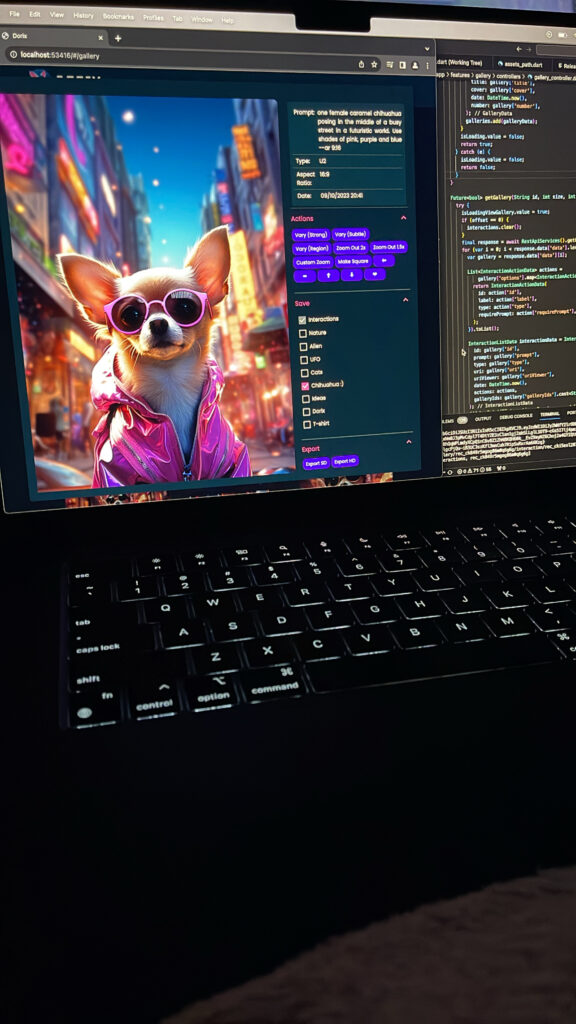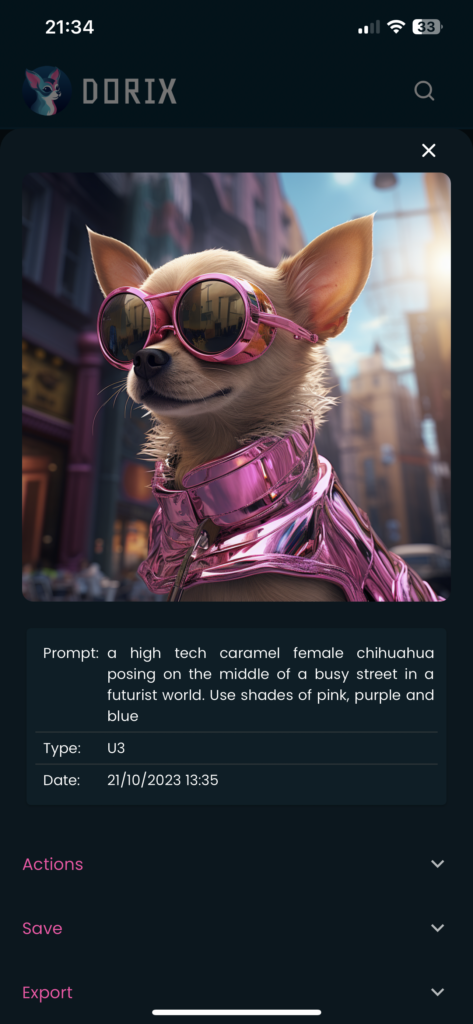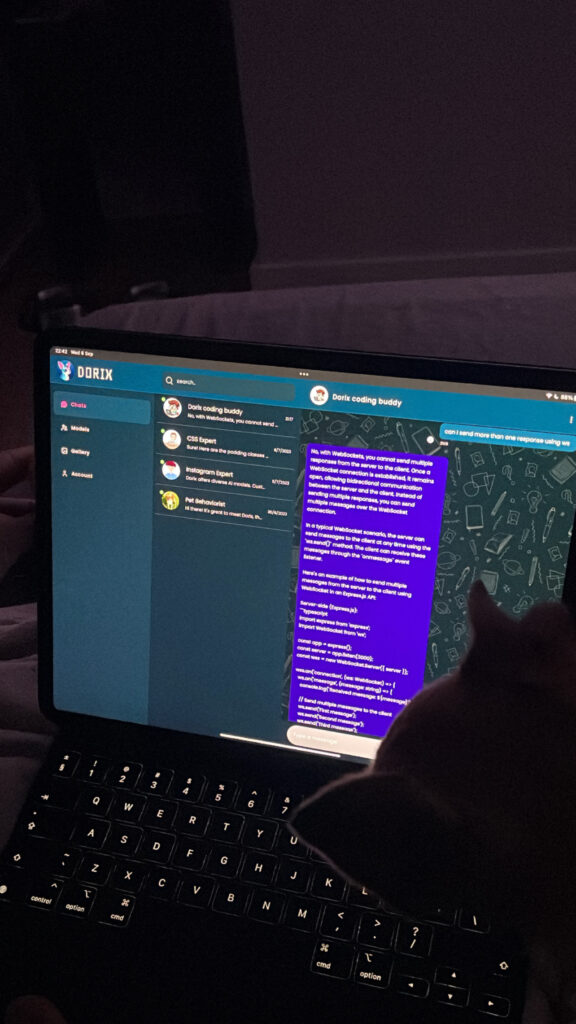




Dorix started as a scrappy idea and became the project that pulled me back into making things for myself. In February 2023 I was sketching an AI‑assisted dog training app specifically for my dog, Doris – the most beautiful chihuahua you’ll ever see. I thought I was building a tiny tool with a cool name. Instead, Dorix turned into a full AI companion I could use for writing, trips, budgeting, learning, and weird side quests I didn’t know I wanted help with.
The name stayed because it carries the heart of it. Dorix feels warm and clever, not corporate. And it did something important for me: it made me love personal projects again. I’d finish a workday and be excited to open my notes and dream up new features. It reminded me of being a kid tearing into toys just to repurpose the DC motors, wiring the wheels to something they were never meant to drive. I’ve built small side projects over the years, but Dorix demanded more – more learning, more persistence, more of me – and gave the joy right back.
I didn’t know Flutter when I started. I had only a little Express.js for APIs. This was also my first real step into AI beyond the headlines and demos – my first time living with an LLM in the loop, using Copilot as a second pair of hands, figuring out how to make AI an actual part of the product instead of a bolt‑on party trick. That last point matters. Most companies treat AI like a sticker you slap on the UI and hope for magic. It doesn’t work that way. You have to design for it, build for it, break it, and try again. Dorix was a lot of tries.
The first big bruise was image generation. I’d built around an unofficial Node.js package for a well-known AI image generator that doesn’t offer an official API. When the package broke and became unreliable, it was painful, but it forced the right architecture. From that day on, Dorix became provider‑agnostic: LLMs, vision, browsing, image generation – everything was swappable behind stable interfaces. If a model improved or vanished, I could switch without ripping up the app. That decision turned out to be the spine of the platform.
What makes Dorix feel useful is the way it organizes intelligence. Instead of one generic chatbot, Dorix has specialized assistants – focused profiles with their own tone, tools, and defaults – so the conversation starts closer to the finish line. A budgeting assistant stays practical and cites numbers; a travel guide packs itineraries and cultural notes instead of vague enthusiasm; an Express.js expert gets you unstuck without drowning you in theory. That means each assistant has its own system prompt, toolbelt, guardrails, and memory policy you can tune. Creativity, context length, concision versus detail – you’re in control. It’s fast to pick the right hat and just move.
To make this concrete, Dorix ships with a catalog of ready-to-go agents, such as: Budget Expert, GPT with Internet, Realistic Image Creator, Image Creator, Dorix Expert, English to Portuguese, PenTest Expert, ExpressJs Expert, AI t-shirt Maker, Personal Chef, Curriculum Expert, LinkedIn Expert, Instagram Expert, CSS Expert, Proofreader, Gomoku player, Cover Letter, Song Recommender, Mathematical History Teacher, Product Manager, Title Generator for written pieces, Startup Tech Lawyer, Speech-Language Pathologist (SLP), Life Coach, Diagram Generator, Chief Executive Officer, Commit Message Generator, Salesperson, Language Detector, Startup Idea Generator, Solr Search Engine, Senior Frontend Developer, Web Browser, New Language Creator.
Vision was non‑negotiable. So much real work starts with “look at this.” Dorix can inspect photos, screenshots, and documents, pull out key information, suggest changes, and even translate visual ideas into structure – like turning a rough UI sketch into clean HTML/CSS with a responsive layout. On the flip side, it can generate images from text prompts.
When I need current information, Dorix can browse. It grabs pages, cleans them up, extracts what matters, and links sources so verification is built in. That “show your work” approach makes the answers trustworthy. Communication is flexible too. I can upload files, and switch languages on the fly with translation woven into the conversation. The whole thing is built with Flutter, which means it’s comfortable on phone, desktop, tablet, or web.
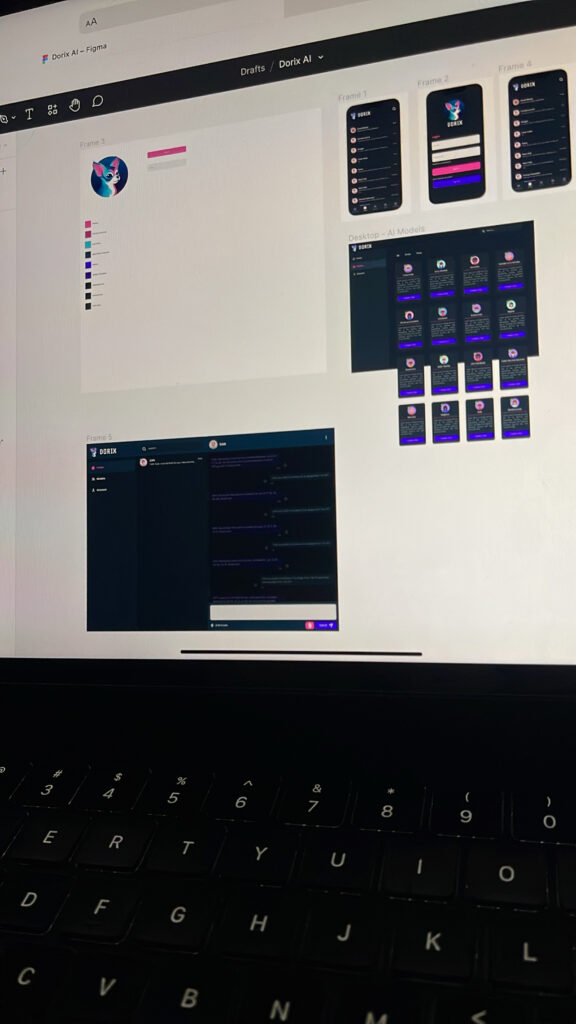
Along the way, I shipped a v2 redesign that folded in UI improvements I learned from v1.
Dorix is live on the web at dorix.ai. It’s in a waitlist phase, but I usually give waitlisted folks access to the beta web app and apps so they can try it early.
I also created some merch for Dorix – branded mugs, t-shirts, and hoodies with a techy design using the Dorix brand colors. Most pieces feature a “high tech” chihuahua that captures both the technical side and the heart of the project. It felt right to make something physical for something that had become so personal.
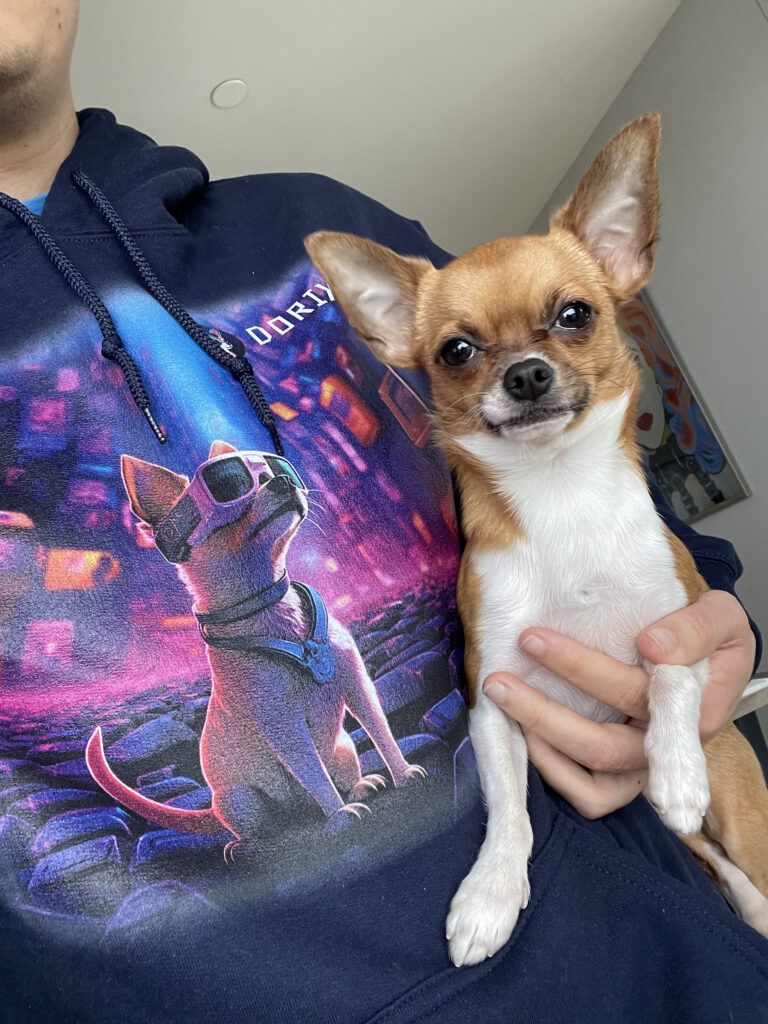

After about a year I had a demo I was proud to show. After roughly a year and a half, I paused development. Not because I’m done with Dorix, I’m not, but because Eolas needs the spotlight right now. Dorix is mostly software. Eolas asks for everything at once: code, AI, 3D modeling, sewing, soldering, microcontrollers. It’s harder, and I want that challenge. Dorix will benefit from the lessons I’m learning on the hardware side, and at some point I’ll swing back and push it forward again.
So the next steps for Dorix are intentionally undefined. That’s okay. It already did the big job: it dragged me back into the workshop, got me excited to ship my own ideas, and proved that thoughtful AI can actually help without taking over. When I think about Doris curled up next to me while I pushed a late‑night build, it makes sense that this was the project to wake everything up.
Below you can find videos and screenshots of Dorix: